
Lions vs Vikings: Cultural Legends Shaping Art, Sports, and Identity, exploring how ancient symbols influence modern culture, sports, and identity.
Lions vs Vikings: Cultural Legends Shaping Art, Sports, and Identity is more than a dramatic comparison it is a window into how ancient symbolism continues to define modern culture, identity, and collective imagination across Europe and North America. From national emblems and sports teams to tattoos, films, and political symbolism, the clash between the lion and the Viking warrior reflects deep-rooted ideas of power, belonging, and heritage. These legends, born in medieval history, continue to shape how societies understand leadership, courage, and cultural pride.
For Cultural History Enthusiasts, this topic offers historical depth.
- For Identity Seeking Modern Readers, it provides meaning.
- For Sports & Symbolism Fans, it explains tribal loyalty.
The Lion as a Universal Cultural Symbol
The Lion in Ancient and Medieval Culture
Across civilizations, the lion has symbolized dominance, kingship, and divine authority. In Europe, lions appeared on royal banners, coats of arms, and monumental architecture, embodying strength and legitimacy.
In medieval Europe, lions were closely tied to:
- Monarchical authority
- Military dominance
- Moral courage and justice
The lion’s symbolism spread through cultural diffusion, influencing heraldry in England, France, Scotland, and beyond. Even today, lions remain central to national identity, from sports logos to state emblems.
Lions in Art, Mythology, and Identity
Lions dominate mythology, sculpture, paintings, and architecture because they visually communicate power without words. Their presence in art reinforces:
- Warrior culture
- Social hierarchy
- Political development
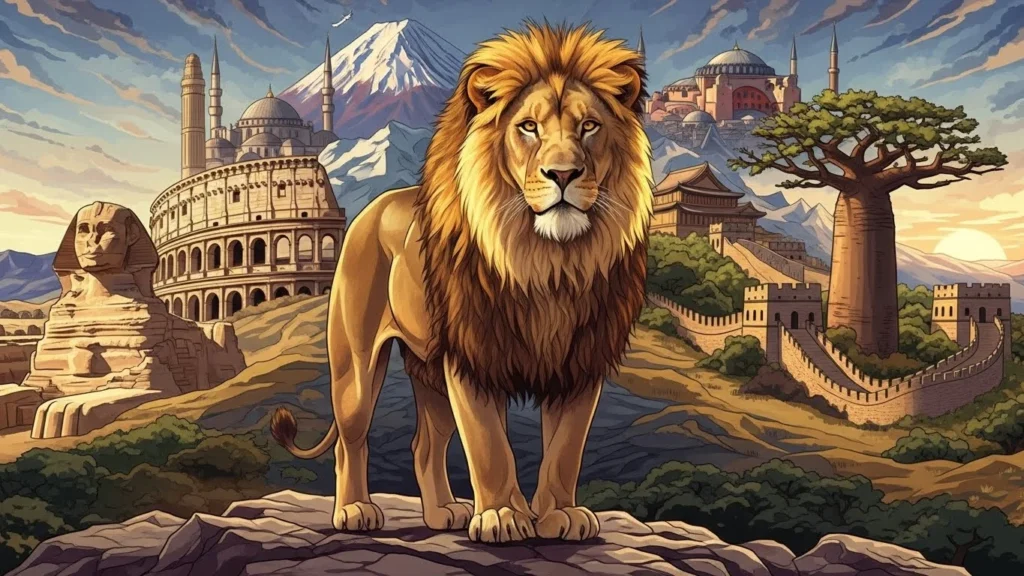
This explains why modern institutions sports teams, governments, and brands continue to adopt lion imagery to project authority and resilience.
Who Were the Vikings? A Cultural Overview
Origins of the Vikings
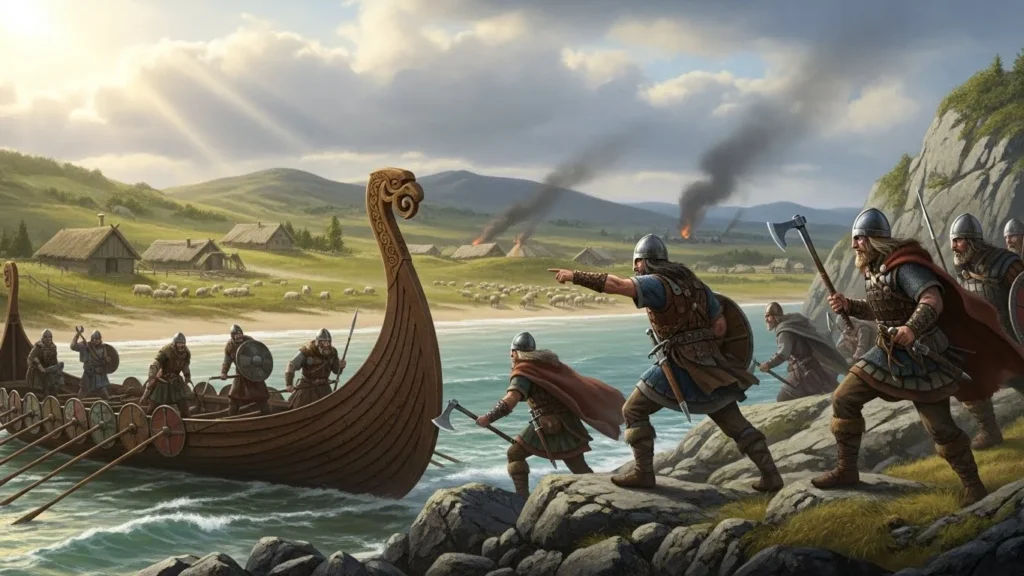
The Vikings were seafaring Norsemen from Scandinavia, specifically Denmark, Norway, and Sweden. Active during the Viking Age (late 8th to mid-11th century), they reshaped medieval Europe through raids, trade, settlements, and exploration.
They navigated vast waters using advanced longships, mastering navigation across the Baltic Sea, Norwegian Sea, Caspian Sea, and into the Mediterranean, North Africa, and the Middle East.
Viking Expansion and Cultural Reach
The Viking expansion extended far beyond Scandinavia:
- England, Ireland, Scotland, Wales, and the British Isles
- France (notably Normandy)
- Russia and Kievan Rus
- Iceland, Greenland, Vinland, and Newfoundland in North America
This vast reach enabled cultural exchange, migration patterns, and the blending of traditions across continents.
- Viking Society, Economy, and Belief Systems
- Viking Society and Social Structure
Viking society was organized into distinct social classes:
- Free farmers
- Warriors
- Traders
- Enslaved people (slavery played a key economic role)
Their economy thrived on trade networks, Viking trade routes, and Viking raids, connecting places like Baghdad, Constantinople, Byzantium, Novgorod, and Kiev via the Dnieper River and Volga River.
Religion: Paganism to Christianity
The Vikings practiced Norse religion, rooted in pagan traditions, Viking mythology, and heroic sagas. Over time, Christianisation transformed their belief systems, marking a major religious transition in Scandinavian history.
This shift influenced:
- Cultural identity
- Political development
- Religious transformation
Lions vs Vikings: Two Models of Power
Symbolic Contrast
Symbolic Contrast
| Aspect | Lions | Vikings |
|---|---|---|
| Core Symbol | Authority, royalty | Exploration, resilience |
| Cultural Role | Stability, order | Expansion, adaptation |
| Identity Meaning | Kingship, dominance | Freedom, discovery |
| Modern Use | National emblems, sports | Sports teams, pop culture |
This contrast explains why Lions vs Vikings: Cultural Legends Shaping Art, Sports, and Identity resonates so strongly with modern audiences.
Vikings in Art, Archaeology, and Language
Archaeological Evidence
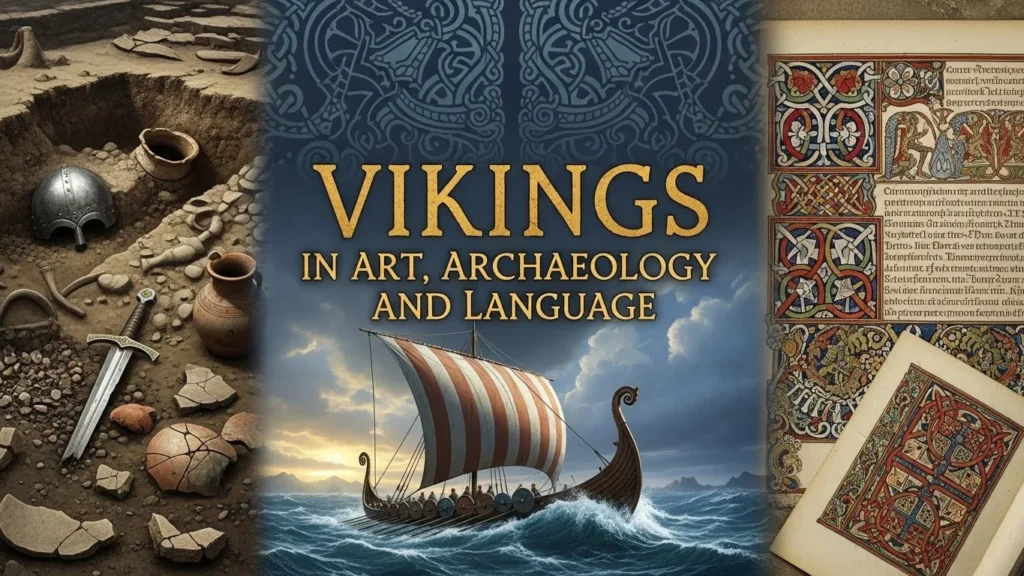
Modern understanding of Vikings comes from archaeology, including:
- Runestones
- Runic inscriptions
- Viking ships
- Burial sites at Birka, Hedeby, Jorvik, and Gamla Uppsala
These discoveries challenge the myth versus reality narrative, revealing a sophisticated seafaring civilization rather than mere raiders.
Language and Cultural Influence
The Old Norse language influenced modern European languages through linguistic influence and migration. Place names across Europe still reflect Viking presence, reinforcing their historical legacy.
Why Modern Audiences Are Drawn to Lions vs Vikings
For today’s readers:
- Lions represent order and authority
- Vikings represent freedom and exploration
Lions vs Vikings in Sports: Identity, Loyalty, and Tribal Culture
One of the most visible modern expressions of Lions vs Vikings: Cultural Legends Shaping Art, Sports, and Identity appears in global sports culture. Sports teams deliberately adopt lions and Viking imagery because these symbols instantly communicate warrior culture, dominance, and collective pride.
Why Sports Teams Choose Lions
Lions are widely used in sports branding across Europe and North America because they symbolize:
- Authority and leadership
- Fearlessness and physical power
- Stability and tradition
National teams and clubs in England, France, and Scandinavia frequently use lions to reinforce historical continuity and national strength. The lion becomes a visual shorthand for medieval power structures and royal legitimacy.
Why Vikings Dominate Sports Identity
Viking imagery, by contrast, emphasizes:
- Aggression and resilience
- Brotherhood and loyalty
- Exploration and conquest
Teams using Viking symbolism tap into Norse culture, Viking warriors, and navigation mastery, appealing strongly to fans who value toughness and endurance. The horned helmet though historically inaccurate has become a powerful example of mythmaking and stereotypes shaping modern identity.
Fan Rituals, Symbols, and Cultural Belonging
Sports fandom mirrors ancient tribal behavior. Chants, colors, mascots, and rituals echo pagan traditions, reinforcing a sense of belonging.
| Element | Lion Symbolism | Viking Symbolism |
|---|---|---|
| Fan Identity | Regal, proud, unified | Fierce, loyal, battle-ready |
| Rituals | Anthems, banners | War chants, horn sounds |
| Emotional Appeal | Honor and dominance | Brotherhood and survival |
This emotional engagement explains why Lions vs Vikings resonates so deeply in sports culture it reflects timeless human instincts tied to social hierarchy and cultural identity.
Lions vs Vikings in Art and Visual Culture
The Lion in Classical and Modern Art
Lions have dominated visual culture for centuries:
- Medieval manuscripts
- Renaissance sculpture
- Modern logos and flags
Artists use lions to express political development, moral authority, and heroic strength. Even today, lion imagery remains central to branding, tattoos, and public monuments.
Viking Art, Symbols, and Aesthetics
Viking art draws heavily from Viking mythology, runestones, and runic inscriptions, featuring:
- Interlaced animal motifs
- Ships and serpents
- Warrior imagery
These designs reflect a worldview shaped by seafaring, maritime exploration, and constant interaction with nature. Modern designers, tattoo artists, and illustrators continue to draw inspiration from this aesthetic due to its raw emotional power.
Myth Versus Reality: Reframing Vikings and Lions
Debunking Viking Stereotypes
Popular culture often portrays Vikings as brutal raiders, but archaeological evidence reveals a far more complex society involved in:
- Trade and economy
- Settlements and colonisation
- Cultural exchange
Viking trade routes connected Scandinavia to Arabia, Baghdad, Byzantium, and Constantinople, proving their role as global connectors rather than mere warriors.
The Lion Beyond Royalty
Similarly, lions are often reduced to symbols of kingship, ignoring their broader cultural meanings:
- Guardianship
- Moral courage
- Collective protection
Understanding these nuances strengthens the cultural depth of Lions vs Vikings: Cultural Legends Shaping Art, Sports, and Identity.
Geography of Influence: Where Vikings Left Their Mark
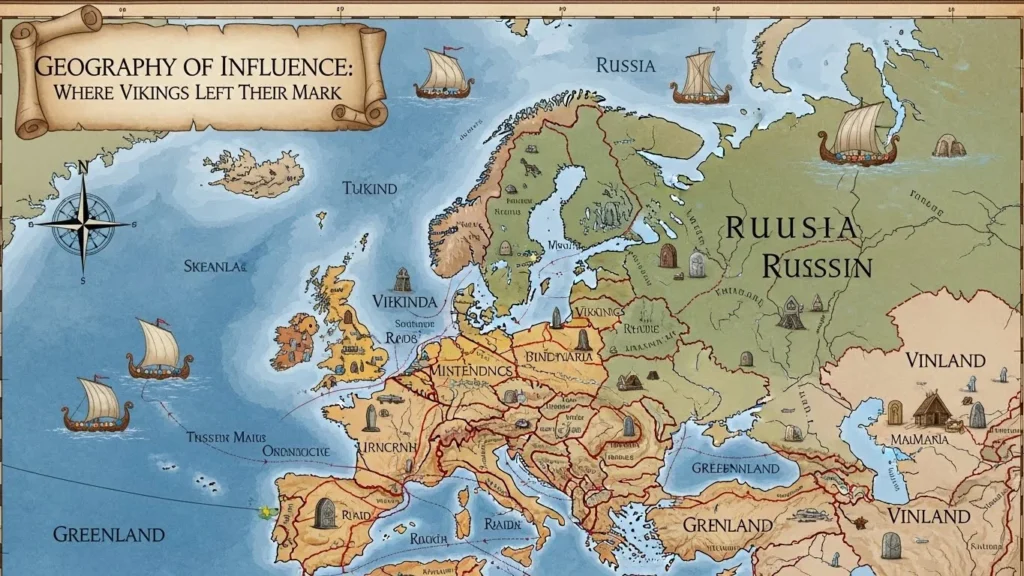
The Vikings shaped regions across the world through migration, settlements, and territorial expansion:
- British Isles: Ireland, Scotland, Wales, Isle of Man
- Eastern Europe: Estonia, Latvia, Lithuania, Ukraine
- Trade centers: Novgorod, Kiev
- Exploration zones: Iceland, Greenland, Vinland, Newfoundland
- Southern routes: Mediterranean, North Africa, Turkey
These interactions led to intermixing cultures, influencing language, governance, and identity across medieval Europe.
Lions vs Vikings and Modern Masculinity
For Identity Seeking Modern Readers, this comparison reflects deeper psychological themes:
- Lions symbolize controlled power and leadership
- Vikings represent freedom, rebellion, and endurance
This duality shapes discussions around gender roles, leadership styles, and modern self identity, especially among younger audiences in urban USA and European settings.
Cultural Identity in a Globalized World
In an era of globalization, people increasingly turn to ancient symbols to anchor identity. Lions vs Vikings provides a framework for exploring:
- Heritage and ancestry
- National pride
- Personal symbolism
For Heritage & Ancestry Explorers, Viking symbolism helps connect DNA results to lived cultural meaning, while lion imagery reinforces continuity and rootedness.
Why This Cultural Rivalry Endures
The endurance of Lions vs Vikings: Cultural Legends Shaping Art, Sports, and Identity lies in its adaptability. These symbols evolve without losing their emotional core, making them timeless tools for storytelling, branding, and self-expression.
Lions vs Vikings in Religion, Belief, and Spiritual Identity
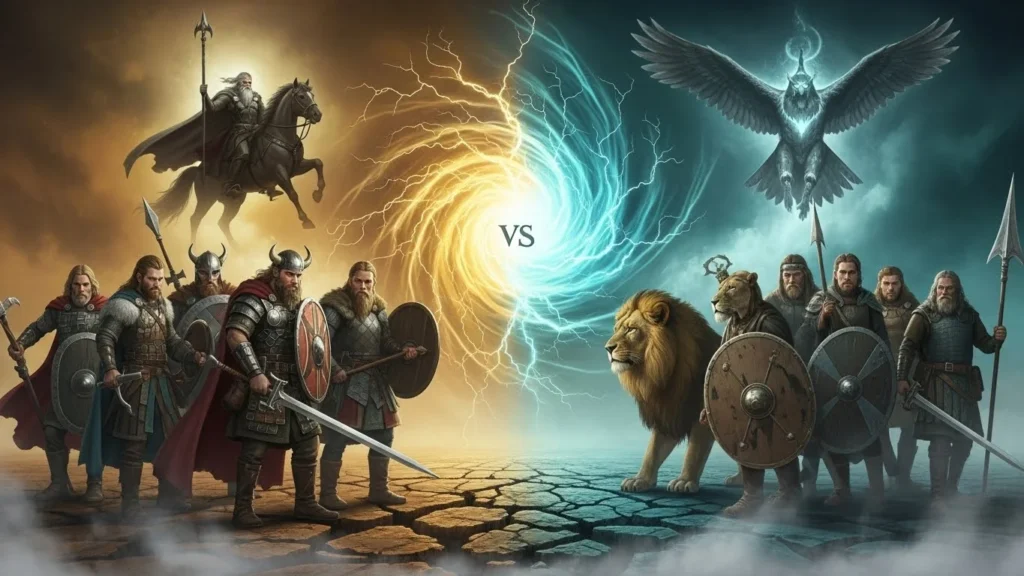
Religion played a defining role in shaping both lion symbolism and Viking culture. Understanding these belief systems adds depth to Lions vs Vikings: Cultural Legends Shaping Art, Sports, and Identity, especially for educators, historians, and identity-focused readers.
The Lion in Religious and Moral Symbolism
Across medieval history, lions were closely linked to:
- Divine authority
- Moral justice
- Guardianship of sacred spaces
In Christianity, the lion symbolized resurrection, vigilance, and righteous power. Churches, manuscripts, and cathedrals across Europe used lion imagery to reinforce social hierarchy and spiritual order.
Norse Religion and Pagan Traditions
The Vikings practiced Norse religion, rooted in paganism, Viking mythology, and heroic sagas. Their belief system emphasized:
- Honor and fate
- Warrior death and the afterlife
- Balance between humans and nature
Gods like Odin and Thor embodied warrior culture, wisdom, and sacrifice values deeply embedded in Viking society.
Christianisation and Cultural Transformation
The gradual Christianisation of Viking lands marked a profound religious transition. As Christianity spread through Scandinavia, it reshaped:
- Political authority
- Cultural identity
- Social norms
This transformation did not erase Viking heritage but blended it with Christian values, creating hybrid traditions still visible in Scandinavian history today.
Viking Burial Practices and Archaeological Insight
Burial Rituals and Social Meaning
Viking burial practices offer crucial archaeological evidence of belief systems and social classes. Burial sites reveal:
- Weapons and tools for the afterlife
- Ships symbolizing maritime exploration
- Status markers reflecting social hierarchy
Sites like Birka, Hedeby, Gamla Uppsala, and Jorvik demonstrate how Vikings honored identity even in death.
Myth Versus Reality Revisited
Burial findings challenge stereotypes, showing Vikings as complex individuals involved in economy, trade, and family life not just warfare.
Lions vs Vikings in Political and National Identity
The Lion as a Political Symbol
Lions have long represented:
- State authority
- National unity
- Territorial stability
From royal crests in England and France to modern political insignia, lions symbolize continuity within medieval power structures and modern governance.
Viking Legacy in National Narratives
Viking history shapes national identity in Denmark, Norway, and Sweden, where Viking imagery reinforces:
- Independence
- Exploration and discovery
- Cultural pride
This legacy extends into Russia, Ukraine, and the historical Kievan Rus, where Varangians influenced early political development.
Education, Academia, and Cultural Storytelling
For Educators and Academic Communicators, Lions vs Vikings offers a powerful teaching framework. It allows exploration of:
- Cultural diffusion
- Language evolution
- Religious transformation
- Economic systems
Universities and museums increasingly present Vikings through interdisciplinary lenses, combining archaeology, linguistics, and anthropology.
Comparative Values Table: Lions vs Vikings
| Dimension | Lions | Vikings |
|---|---|---|
| Core Values | Authority, order | Freedom, resilience |
| Religion | Christianity symbolism | Norse religion, paganism |
| Identity Model | Hierarchical | Communal |
| Cultural Legacy | Stability | Expansion |
| Modern Influence | Politics, sports | Media, ancestry |
This comparison reinforces why Lions vs Vikings: Cultural Legends Shaping Art, Sports, and Identity resonates across generations.
Lions vs Vikings in Modern Media and Storytelling
Film, Television, and Games
Modern entertainment thrives on Viking narratives often blending mythmaking and stereotypes with historical elements. Meanwhile, lion symbolism dominates heroic and royal storytelling.
This contrast appeals strongly to Pop Culture Myth Consumers, who seek epic narratives while navigating myth versus reality.
Gender Roles and Social Meaning
Both symbols shape modern discussions on gender roles:
- Lions emphasize protective leadership
- Vikings highlight endurance and adaptability
These models influence how modern audiences interpret masculinity, leadership, and collective responsibility.
Why These Legends Still Shape Identity
In a fragmented world, ancient symbols provide coherence. Lions vs Vikings offers:
- Emotional grounding
- Cultural continuity
- Identity reinforcement
This explains their persistence across sports, art, education, and personal expression.
Vikings as Global Traders, Explorers, and Cultural Connectors
While popular imagination focuses on warfare, Vikings were among the most sophisticated agents of cultural exchange in medieval Europe. Their success stemmed from advanced navigation mastery, technological innovation, and expansive trade networks.
Viking Trade Routes and Economic Power
The Viking economy thrived on interconnected trade routes linking:
- Scandinavia to England, France, and the British Isles
- Eastern Europe via the Dnieper River and Volga River
- The Islamic world through Arabia and Baghdad
- The Byzantine Empire through Constantinople and Byzantium
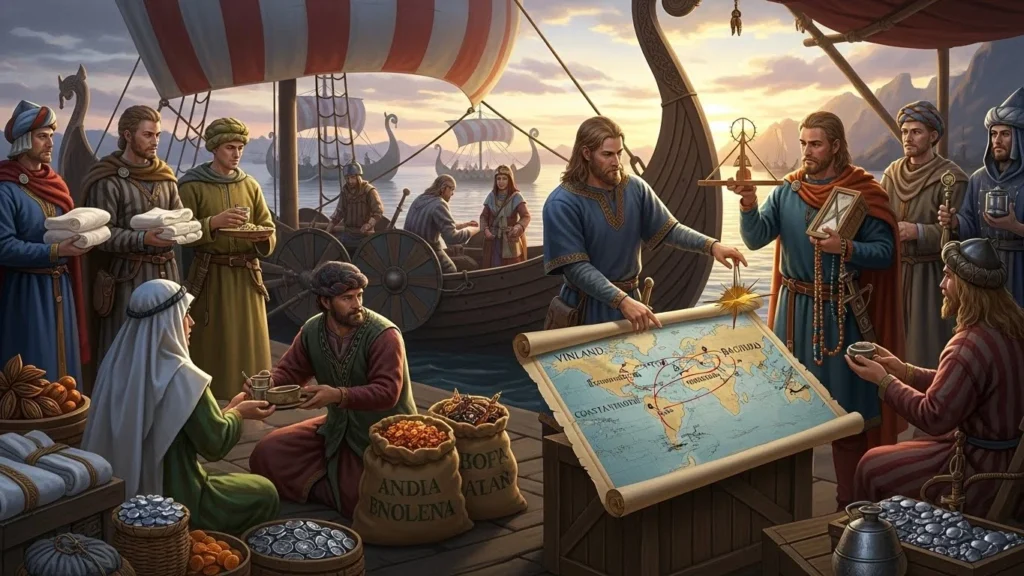
These routes enabled the movement of goods, ideas, and beliefs, accelerating cultural diffusion and political development across regions.
Exploration Beyond Europe
Viking exploration and discovery reached:
- Iceland and Greenland
- Vinland in Newfoundland, North America
- Southern routes into the Mediterranean and North Africa
This maritime exploration positioned Vikings as pioneers of global interaction long before modern globalization.
Lions vs Vikings in Branding, Commerce, and Modern Identity
Why Brands Use Lions
Modern brands adopt lion imagery to communicate:
- Trust and authority
- Stability and leadership
- Timeless power
This aligns with centuries-old associations rooted in medieval power structures and historical legacy.
Why Vikings Dominate Lifestyle Branding
Viking symbolism thrives in:
- Fitness and sportswear brands
- Gaming and entertainment
- Tattoos, merchandise, and storytelling
The appeal lies in Viking ideals of freedom, resilience, and seafaring civilization, resonating strongly with audiences seeking authenticity and strength.
Actionable Insights for Creators, Educators, and Publishers
If you create content around Lions vs Vikings: Cultural Legends Shaping Art, Sports, and Identity, focus on these strategies:
For Writers & Bloggers
- Connect ancient symbols to modern identity struggles
- Balance myth versus reality using archaeological evidence
- Use comparative storytelling to increase engagement
For Educators
- Frame lessons around religious transformation, language evolution, and social classes
- Use Vikings to teach migration patterns and economic systems
- Use lions to explain authority and governance
For Designers & Artists
- Avoid clichés by referencing runestones, runic inscriptions, and authentic Viking motifs
- Use lion imagery intentionally to convey hierarchy or guardianship
Frequently Asked Questions (FAQs)
1. Why are Lions and Vikings often compared culturally?
Because both symbolize contrasting models of power lions represent authority and order, while Vikings embody exploration and adaptability making them ideal lenses for understanding cultural identity.
2. Were Vikings only warriors?
No. Archaeology shows Vikings were traders, settlers, explorers, and skilled navigators involved in trade, economy, and cultural exchange.
3. Why do sports teams use Viking and lion symbols?
These symbols trigger emotional loyalty by tapping into ancient warrior culture, tribal belonging, and shared identity.
4. How did Christianity change Viking culture?
Christianisation transformed Viking belief systems, politics, and social norms while blending with existing pagan traditions.
5. Why does this topic resonate today?
In a globalized world, people seek meaning through heritage. Lions vs Vikings offers symbolic tools for understanding leadership, masculinity, and belonging.
The Enduring Power of Lions vs Vikings
Lions vs Vikings: Cultural Legends Shaping Art, Sports, and Identity endures because it reflects timeless human questions Who are we? Where do we belong? How do we define strength?
- Lions offer stability, order, and guardianship.
- Vikings offer movement, discovery, and resilience.
Together, they form a cultural dialogue that continues to shape art, sports, identity, and storytelling across the USA and Europe. Understanding these legends is not about choosing a side it is about recognizing how ancient symbols still guide modern life.




Leave a Reply